Spam Act and SMS rules for tradies
Updated 20 November 2026 · 5 min read · Zentec Global, Melbourne
If you text or email customers to promote your business, the Spam Act 2003 applies to you. The Australian Communications and Media Authority, or ACMA, enforces it. This guide is a plain summary of what ACMA publishes for businesses. It is general information and not legal advice, so check ACMA's pages for the current rules.
What the Spam Act covers
The Act covers commercial electronic messages. That includes email, SMS, MMS and some instant messages that promote goods or services. A message does not have to go to thousands of people to count.
ACMA's guidance for businesses is written around marketing messages, so start there if you are planning a text or email campaign to past customers.
The three rules
ACMA sums the rules up in three steps. Every commercial message needs to follow all of them.
- Get consent from the person before you send a marketing message.
- Identify your business as the sender.
- Include a clear way to unsubscribe.
Consent: express and inferred
ACMA describes two types. Express consent means the person knows and accepts that they will receive marketing messages from you. ACMA calls this best practice. Inferred consent can apply when someone has knowingly and directly given you their address and it is reasonable to believe they would expect marketing from your business. ACMA says inferred consent is less reliable than express consent.
Keep a record of consent, including who gave it, when and how. Under the Spam Act, it is up to you to prove that you have consent. ACMA also says you cannot send a message asking for consent, because that message is itself marketing.
Identify yourself
Your message must accurately identify your business. ACMA says to use the correct legal name of the business, or your own name and your ABN. If someone else sends the messages for you, such as an agency or a software tool, the message must still identify you as the business that authorised it.
ACMA also says that even when someone else sends your marketing, you must still have consent from each person who receives it.
Make it easy to unsubscribe
Every commercial message needs an unsubscribe option. ACMA says it must present the instructions clearly, be honoured within 5 working days and not require the person to give extra personal information or log in to an account.
On a text, many businesses use a short line such as "Reply STOP to opt out". Once someone unsubscribes, remove them from every list you use, including lists kept by software or an agency.
Messages about a booked job
A reminder about an appointment you booked is a different kind of message from a marketing campaign. ACMA's guidance sets out which messages count as marketing and which are treated differently. A message that mixes job details with a promotion can count as marketing, so check ACMA's pages if you are unsure.
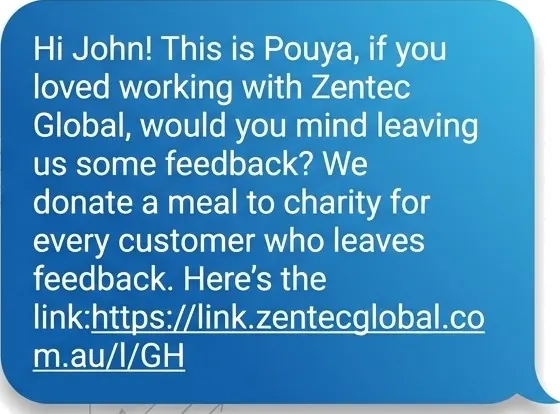
Review request texts
A text asking a customer for a Google review can promote your business, so it is sensible to treat it with care. Think about whether the customer gave you their number for the job, keep the text short, say who you are and include a way to opt out. If you want certainty, ask ACMA or a lawyer.
Phone calls follow separate rules
The Do Not Call Register covers telemarketing calls, not texts or emails. If you plan to ring people to market your services, check the register's rules before you do. ACMA covers both areas on its website.
Keep good records
If ACMA ever asks, you need to show how you got consent and how you handle opt-outs.
- Record who consented, when and how.
- Keep a list of people who have unsubscribed and check every send against it.
- Store customer phone numbers and emails securely.
- Keep copies of the messages you send.
Before you send a campaign
Before sending texts or emails to a list, ask four questions. Do I have consent for each person on this list, and can I prove it? Does the message say who I am? Does it include a working way to unsubscribe? Have I removed everyone who opted out? If any answer is no, fix that first.
Where to get help
ACMA's website has plain guides for businesses and a contact form for questions. The business.gov.au site also covers marketing rules for small businesses. For a specific situation, a lawyer can give advice that fits your business.
Examples from our clients